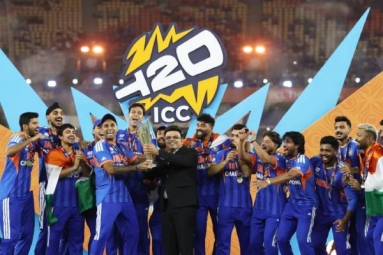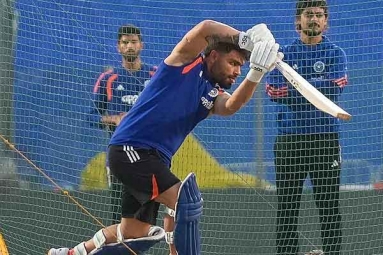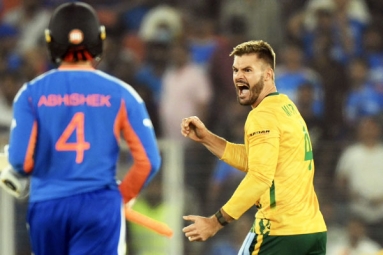
(Image source from: x.com/BCCI)
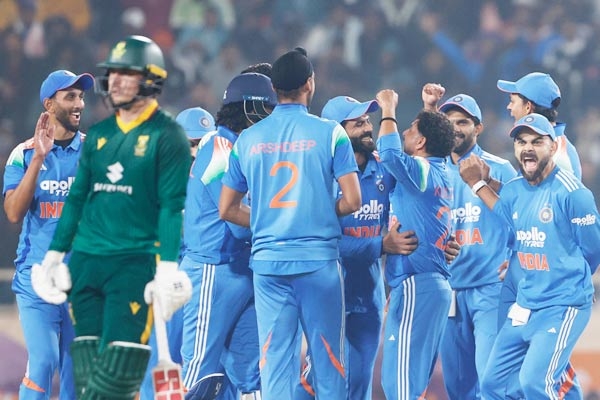
Virat Kohli increased his world record for the most ODI centuries, while Rohit Sharma set a new world record for the most ODI sixes. A packed stadium in Ranchi enjoyed a beautiful Sunday evening as they watched India narrowly defeat South Africa in the first ODI of a three-match series. Kohli and Rohit showed their old form with a partnership of 136 runs. Kohli played long enough to hit seven sixes, and the fast bowlers caused just enough trouble before the pitch became easier to play on as dew set in under the lights. India faced a big challenge having lost their 19th consecutive toss in ODIs. During the afternoon, the older ball made scoring difficult, which led to a slowdown after the strong start given by Kohli and Rohit. At night, batting conditions improved significantly. In the end, India relied heavily on their strong start of 161 runs in 21.2 overs and the two early wickets that Harshit Rana took with the new ball. South Africa's next three partnerships, despite being at 11 for 3, were: 66 runs in 10.2 overs, 60 runs in 6.4 overs, and 97 runs in 11.1 overs. Marco Jansen and Matthew Breetzke each scored 70 runs, while Dewald Brevis and Tony de Zorzi contributed 30 runs each. The target was reduced to 123 runs from 17 overs when Kuldeep Yadav took the wickets of Jansen and Breetzke in the same over, giving India a moment to breathe.
South Africa kept fighting back, as Corbin Bosch’s 67 brought them to needing 19 runs off the last 10 balls, though he was the last man standing. Borch found himself struggling against Arshdeep Singh’s yorkers. This was especially painful for Bosch, who had bowled overs 46, 48, and 50, allowing only 21 runs and helping to keep India to 349. This ODI reflected the recent trends in ODI cricket in India. In the afternoon, the new ball doesn’t create much movement, but you can adapt to the pitch's slowness as it softens. There’s a brief opportunity for movement under the lights with the new ball, which teams should take advantage of since batting becomes easier once the dew arrives. Kohli and Rohit recognized the importance of taking full advantage of the new ball after Yashasvi Jaiswal's early wicket. For the first time in his career while batting first, Kohli hit two sixes in the first 10 overs, both via drives that he might have previously played more cautiously. Rohit, who usually prefers faster starts, quickly caught up to Kohli by hitting two consecutive sixes off the offspinner Pernemal Subrayen.
Rohit hit his third six, a powerful pull shot off Jansen, just after reaching his fifty, which pushed his total past Shahid Afridi's world-record score of 351. This was also India's eighth six, the highest they've achieved in the first 20 overs of an innings. The next short ball from Jansen kept low, getting Rohit out lbw. Kohli, who was on 72 from 61 balls with five sixes, couldn’t face the next deliveries because the new batsmen struggled with the slow pitch. Ruturaj Gaikwad posted 8 runs off 14 balls, and Washington Sundar made 13 runs off 19 balls, while they both held the strike. Kohli had to stay strong during this phase. He easily picked up singles, but during the time between Rohit getting out and Kohli's century, India only scored 72 runs in 16.3 overs.
Upon reaching his hundred, Kohli expressed his emotions with a celebration. This was his first century since February; since he only plays one format, there’s a lot of focus on his and Rohit's futures. Following this, Kohli aggressively scored, hitting two additional sixes and making 35 runs off the next 17 balls. KL Rahul, who managed to get through the tough phase, raised India's total six count to 16 and their score to 349. Rana quickly demonstrated why the selectors and management trust him. In the second over of the innings, he made the ball move both ways and took the wickets of Ryan Rickelton and Quinton de Kock without any runs scored. Rickelton was out bowled by a delivery that swung away and then came back just enough to hit his middle stump. The same type of movement got de Kock's edge to the slips. Aiden Markram, standing in as captain while Temba Bavuma rested, tried to cut a ball from Arshdeep at the start of the fifth over but edged it to Rahul.
At this stage, the ball had stopped swinging, the pitch was starting to skid, and the outfield had become moist and soon damp. All these factors favored the batters, leaving one to wonder what a huge score it would have been if not for those three early wickets. Kuldeep trapped de Zorzi lbw for 39 runs off 35 balls, and Rana skillfully managed to contain the aggressive Brevis, who scored 39 off 28 balls, while Jansen and Breetzke still managed to put India in a challenging position. After de Zorzi was out, Breetzke took on the role of scoring singles while observing the other batsmen make runs. Jansen created significant damage during his 39-ball innings of 70 runs, which included the fastest fifty by a South African player in India and the second-fastest against India.
The dew became so thick that India had to set aside their spinners for a bit. Washington only bowled three overs. After using up all the fast bowlers, Rahul turned back to Kuldeep, who, as wrist spinners sometimes do, caused Jansen to edge a ball off the toe of his bat on a long hop. In that same over, Breetzke was caught at long-on, maybe because he got too near the ball's pitch. Surprisingly, South Africa still hung in there. Bosch kept South Africa's hopes alive by scoring his first fifty, but he didn’t have enough support to achieve the win. Arshdeep's wicket-maiden in the 47th over looked like it had locked the game up, but Bosch continued to fight. Ultimately, it probably came down to the two full tosses he failed to hit from Prasidh Krishna in the 46th over.